Kidney Stones
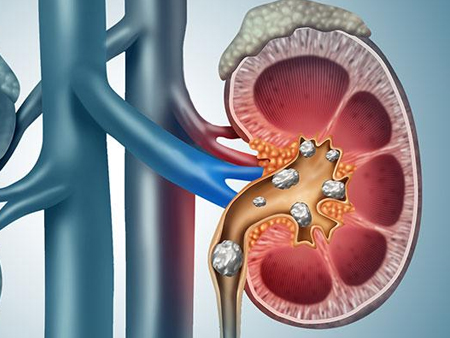
Kidney stones are hard deposits made of minerals and salts that develop within the urine and form inside the kidneys. They can be as small as a grain of sand or rarely-larger than a golf ball. Kidney stones are also called renal calculi or nephrolithiasis
They can develop for several reasons, including dietary habits, excess body weight, certain medical conditions, and the use of specific supplements or medications. Kidney stones may affect any part of the urinary system — from the kidneys to the bladder. In many cases, they form when urine becomes highly concentrated due to reduced fluid content, allowing minerals to crystallize and bind together into solid stones.
Symptoms
Kidney stones often cause no symptoms until they move within the kidney or enter the ureter — the tube connecting the kidney to the bladder. If a stone becomes lodged in the ureter, it can block urine flow, leading to kidney swelling and severe pain.
- Serious, sharp pain in the side and back, below the ribs
- Pain that spreads to the lower stomach area and groin
- Pain that comes in waves and varies in how intense it feels
- Pain or a burning feeling while urinating
- Pink, red or brown urine
- Cloudy or foul-smelling urine
- A constant need to urinate, urinating more often than usual or urinating in small amounts
- Upset stomach and vomiting
- Fever and chills if an infection is present
When to See a Doctor
Schedule an appointment with your healthcare provider if you experience any symptoms that concern you. Seek immediate medical attention if you have:
- Severe pain that makes it difficult to sit still or get comfortable
- Pain accompanied by nausea and vomiting
- Pain along with fever and chills
- Blood in the urine
- Difficulty passing urine