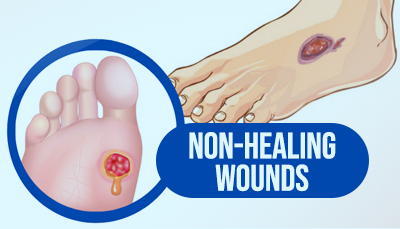
A small wound on the foot may seem harmless at first. Many people assume that with a few dressings and some ointment, it will heal within days. But what if it doesn’t? What if it remains open for weeks, keeps discharging fluid, or slowly increases in size despite regular treatment?
Non-healing wounds are more common than we realize, especially among people with diabetes, long-standing varicose veins, or poor circulation. When a wound refuses to close, it is often not just a surface problem — it is a sign that something deeper needs attention.
Wound healing is not random. It follows a structured process:
Inflammation – The body sends immune cells to clean the wound.
Repair – New tissue begins to form.
Remodeling – The skin strengthens and regains structure.
This entire process depends heavily on one essential factor: adequate blood supply.
Blood delivers oxygen, nutrients, immune cells, and repair signals to the injured area. Without proper circulation, even the most advanced dressing materials cannot compensate for what the tissues are missing internally.
Diabetes and Damaged Microcirculation
In people with diabetes, prolonged high blood sugar gradually damages small blood vessels — the tiny capillaries that supply oxygen to tissues. Over time, these vessels become stiff or narrowed.
Oxygen is critical for wound healing. It helps:
Destroy bacteria
Produce collagen (the building block of skin)
Form new blood vessels
Generate cellular energy
When oxygen delivery is compromised, healing slows down significantly. This is why diabetic foot ulcers can become serious. What starts as a minor crack or blister can progress if circulation is poor and sensation is reduced.
Venous Ulcers and Poor Blood Return
In patients with varicose veins or chronic venous insufficiency, blood does not flow back properly from the legs to the heart. This leads to swelling, skin discoloration, and eventually ulcers — usually near the ankle.
Here, the issue is not only infection but congestion. The tissues remain in a state of chronic inflammation because effective oxygen exchange is reduced. Without correcting the circulation problem, the ulcer may keep recurring.
Regular dressings are important. They protect the wound, absorb discharge, and reduce infection risk. However, if the underlying circulation issue is not addressed, surface-level care may not be sufficient. Many patients continue dressing for months without significant improvement. At that stage, it becomes necessary to evaluate deeper biological factors.
Think of microcirculation as the road network that supplies your tissues. If the roads are blocked, supplies cannot reach their destination.
When tiny blood vessels are damaged:
Oxygen delivery decreases
Waste products accumulate
Repair signals slow down
Improving circulation and tissue oxygenation can be a key step in chronic wound management.
Today, wound care involves more than cleaning and covering. A comprehensive plan includes:
- Strict blood sugar control
- Compression therapy (for venous ulcers)
- Removal of dead tissue (debridement)
- Infection management
- Nutritional support
Oxygen-dependent repair plays a major role in tissue recovery. At the cellular level, oxygen supports collagen production, immune function, and new blood vessel formation.
In selected cases, hospital-based regenerative protocols are used to support microcirculation and enhance the body’s natural healing response. These are not replacements for standard treatment but adjunct approaches aimed at improving internal repair mechanisms.
Proper patient evaluation is essential. Not every wound requires advanced intervention — but some do.
Seek medical evaluation if:
The wound has not reduced in size after 3–4 weeks
There is repeated infection
The wound keeps reopening
There is blackened or dead tissue
The patient has diabetes with numbness in the feet
There is increasing swelling or skin discoloration
Early intervention can prevent complications and reduce the risk of severe infections.
For diabetic patients:
Inspect your feet daily
Maintain blood sugar control
Avoid walking barefoot
Wear protective footwear
For patients with venous issues:
Elevate legs regularly
Use prescribed compression stockings
Avoid prolonged standing
Small preventive steps can make a significant difference.
There is no single “magic solution” for chronic wounds. Healing depends on multiple factors — circulation, blood sugar levels, infection control, and overall health.
However, if a wound refuses to heal despite routine care, it may be time to look beyond surface treatment and evaluate deeper issues such as microcirculation and tissue oxygenation.
Timely assessment and a comprehensive approach can help restore the body’s natural repair capacity and prevent long-term complications.
Ignoring a non-healing wound is never wise. Early, structured medical care makes all the difference.